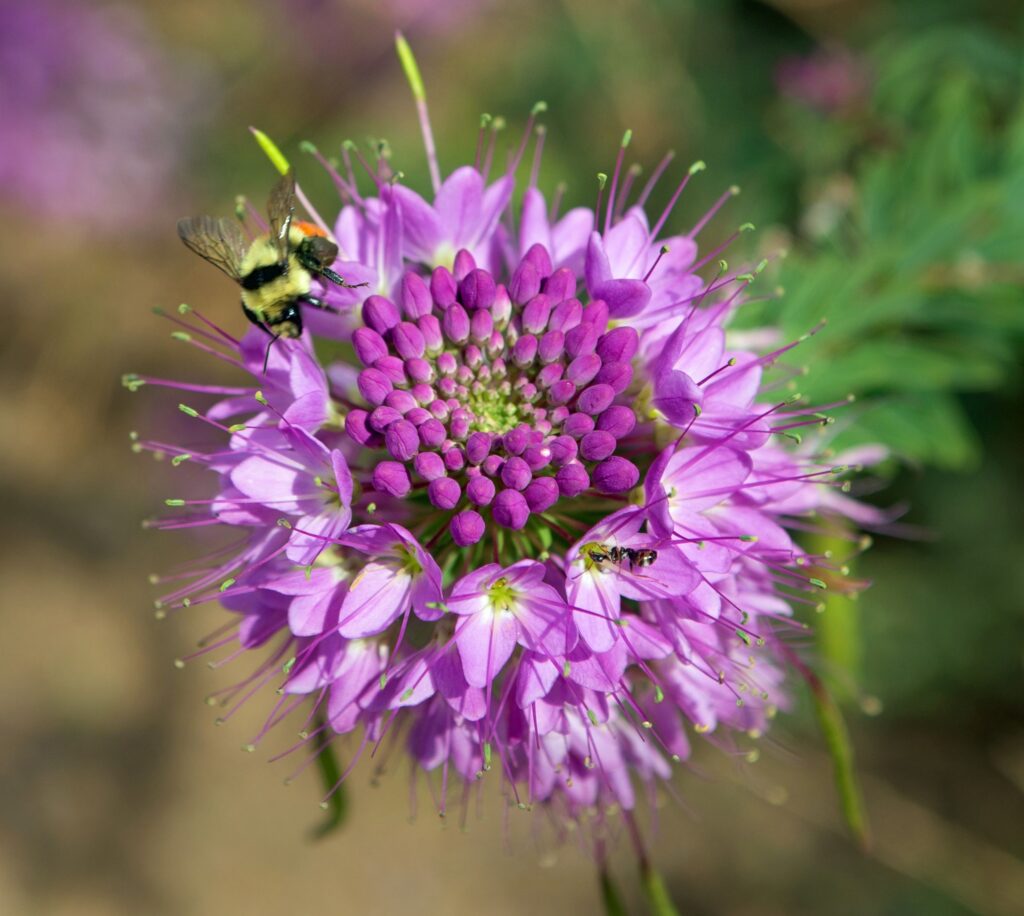
Coyote Tobacco is an annual, white wildflower native to western North America, occurring from British Columbia to Mexico. It can grow across a wide elevation range from 500 to 9,000 feet. Coyote Tobacco has long been cultivated by Native Americans for medicinal and ceremonial uses. The high nicotine content of its leaves, as much as three times that of regular tobacco, protects the plant from predators because it is poisonous to most animals and insects. An exception is the nocturnal hawk moth, its main pollinator, which lays its eggs on the plant. When the eggs hatch into caterpillars that feed on the plant, Coyote Tobacco can switch from blooming at night to blooming in the daytime, and it also has some sophisticated chemical responses to limit the caterpillars.
Coyote Tobacco is a useful reclamation species because it prefers dry, disturbed areas. Wildfire typically triggers germination of the seeds.