Also known as Mariposa Lily (Mariposa means “butterfly” in Spanish), there are many Sego Lily species that range from the Dakotas west to the Cascade Mountains and south to New Mexico, Arizona and California. “Sego” is a Shoshonean word for “edible bulb” and, as the meaning implies, this plant was a traditional food source for Native Americans throughout its range. Here in the Four Corners region it has traditional importance to the Navajo, Ute, and Hopi people as a food source and more. Sego Lily is the state flower of Utah, where its bulbs were also a vital wild food for the early Mormon settlers. (Wild plants are now protected from harvesting by the State of Utah.) The bulbs are also an important food for wildlife ranging from rodents to black bears. The walnut-size bulb is sweet and nutritious and can be eaten raw or cooked. It tastes like a potato when boiled. Warning: Before it flowers, the sego lily can be confused death camas! It can then only be distinguished from death camas by its leaves, which have a rounded, u-shaped cross-section compared to the sharply V-shaped leaves of death camas.
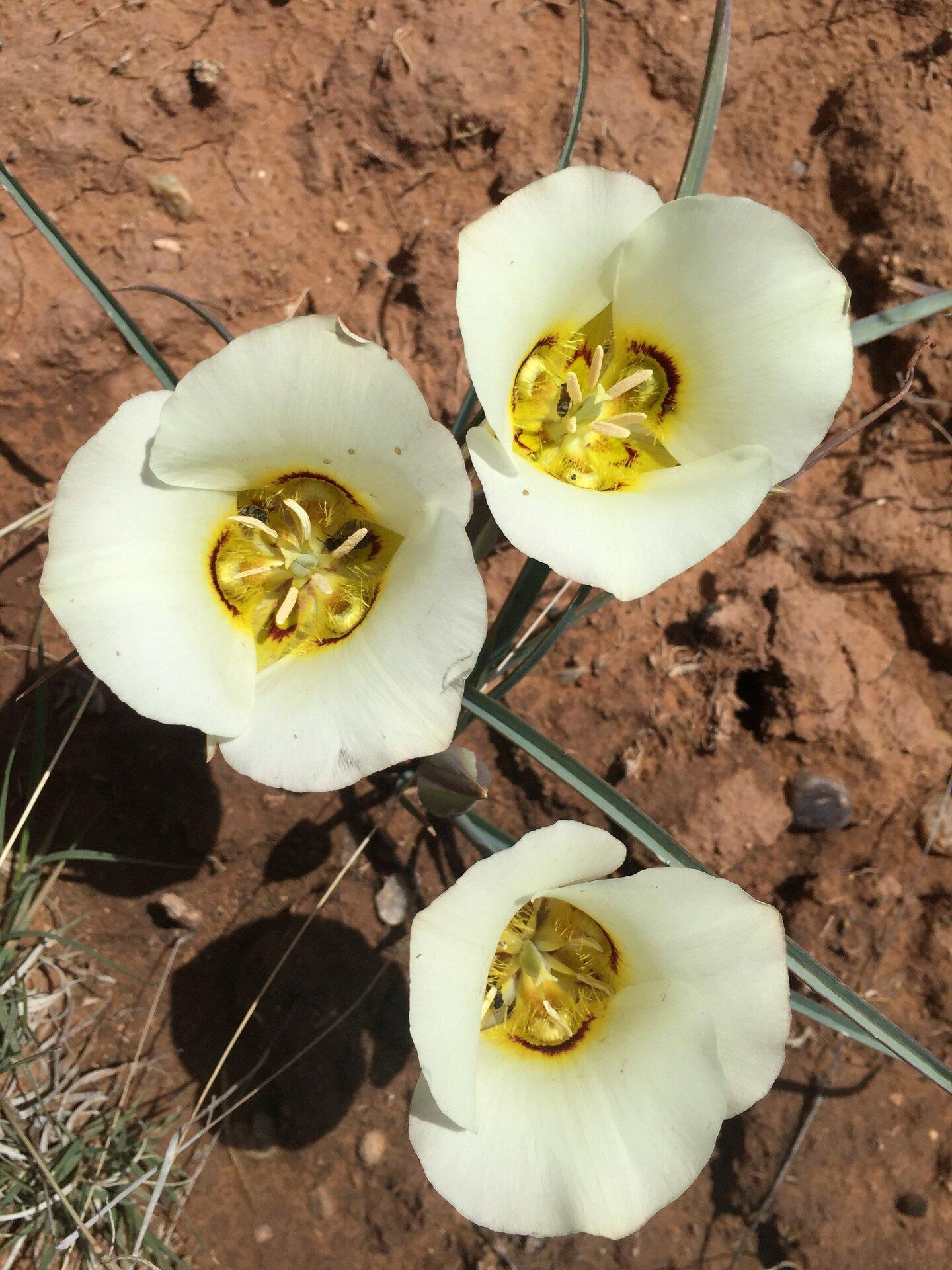
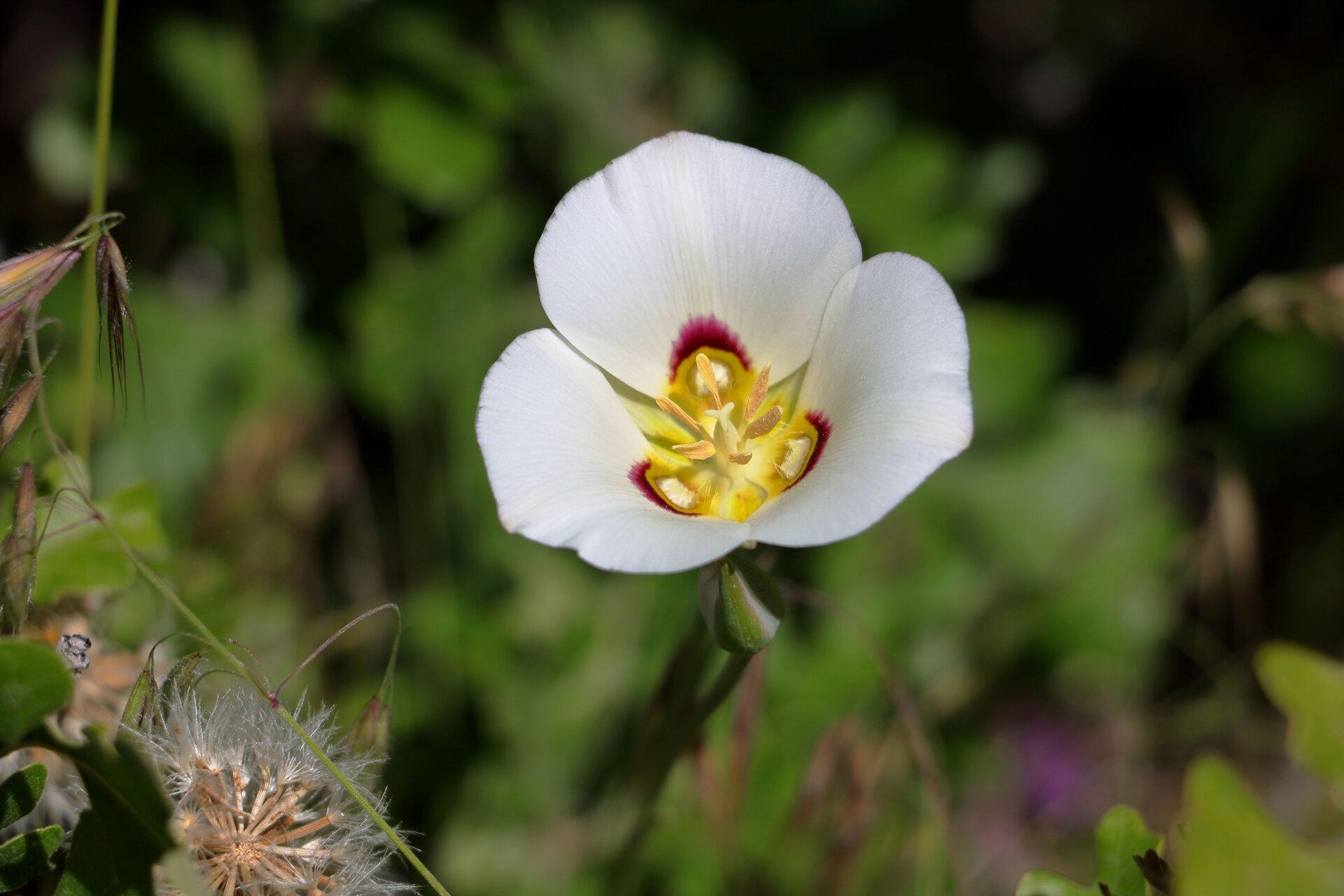
All species of Sego lily are similar in form, each plant consisting of a single stem with grass-like leaves topped with a single exquisitely detailed cup-shaped flower up to 3 inches in diameter. In the Four Corners area where Southwest Seed is located, three species of Sego Lily exist with somewhat overlapping ranges: Calochortus flexuosus is the desert species, C. gunnisonii is a mountain species, and C. nuttallii grows inbetween and overlaps with both. As the name flexuosus may imply, the comparatively wide leaves of this species are often curled and the stems curved, compared to the straighter stems and leaves of the other two species. The petals range from white to pink and light lavender. C. gunnisonii has a broad band of yellow hairs on the lower petals, which are most often white but sometimes tinged with blue or pink.
C. nuttallii, the species available here at Southwest Seed, inhabits dry, open pinyon-juniper and ponderosa pine forests and nearby sagebrush flats and foothills. The smooth yellow base of each petal has a purple spot or bar between the yellow base and the . Like the other local species, the upper petals are most often white but can be tinged with pink.
Though the flowering period is short, Sego Lilies are a beautiful addition to a native landscape. They thrive on dry, somewhat sandy soil with low amounts of organic matter. Sego Lily seeds germinate slowly and therefore can be challenging to establish. Individual plants may not bloom every year, so it is a good idea to plant in groups to try to ensure that at least a few flowers will appear each season. If your plants are in a garden and gophers or other rodents are prevalent in your area, you can protect the bulbs by enclosing them underground with chicken wire or something similar.