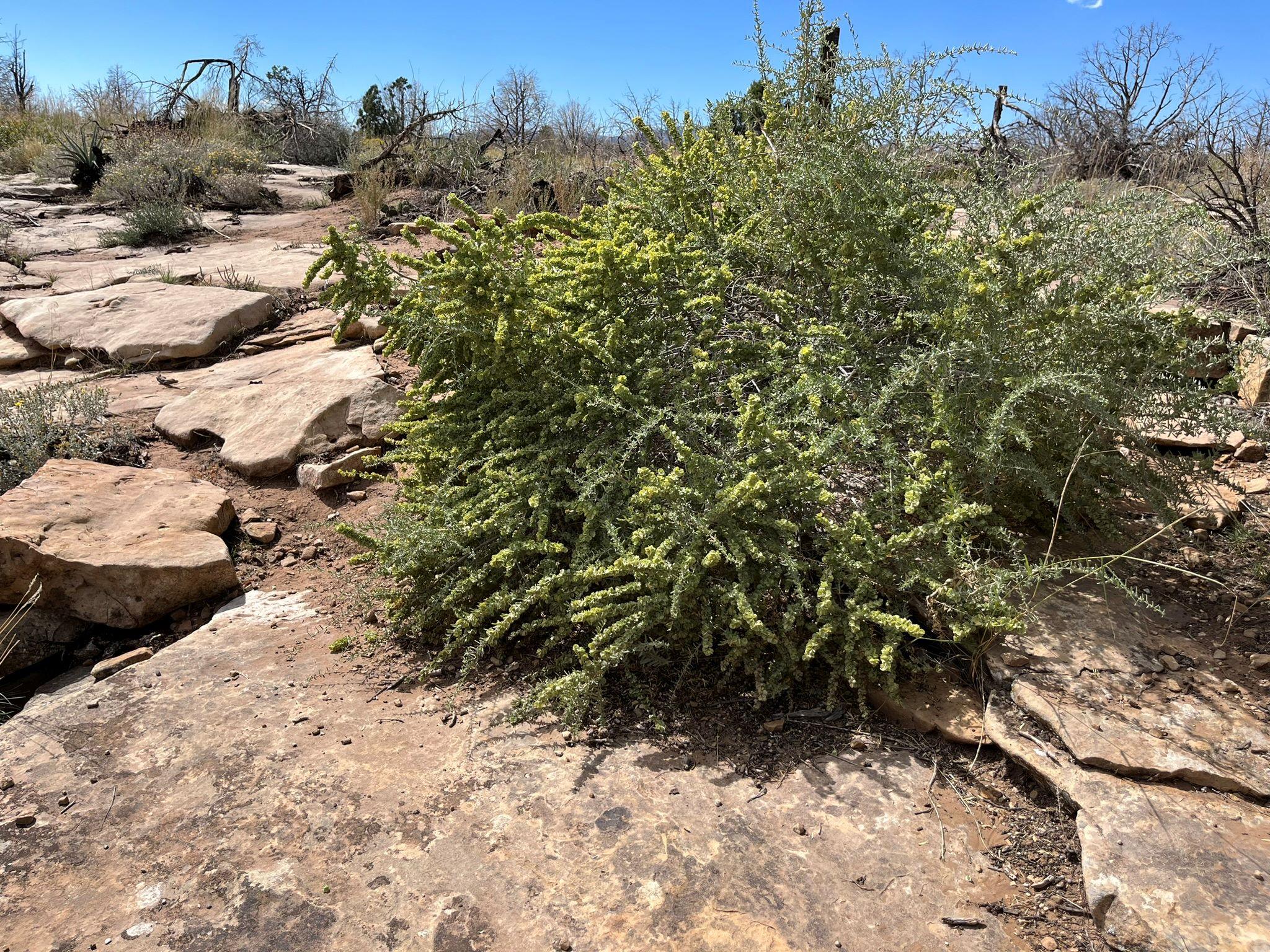
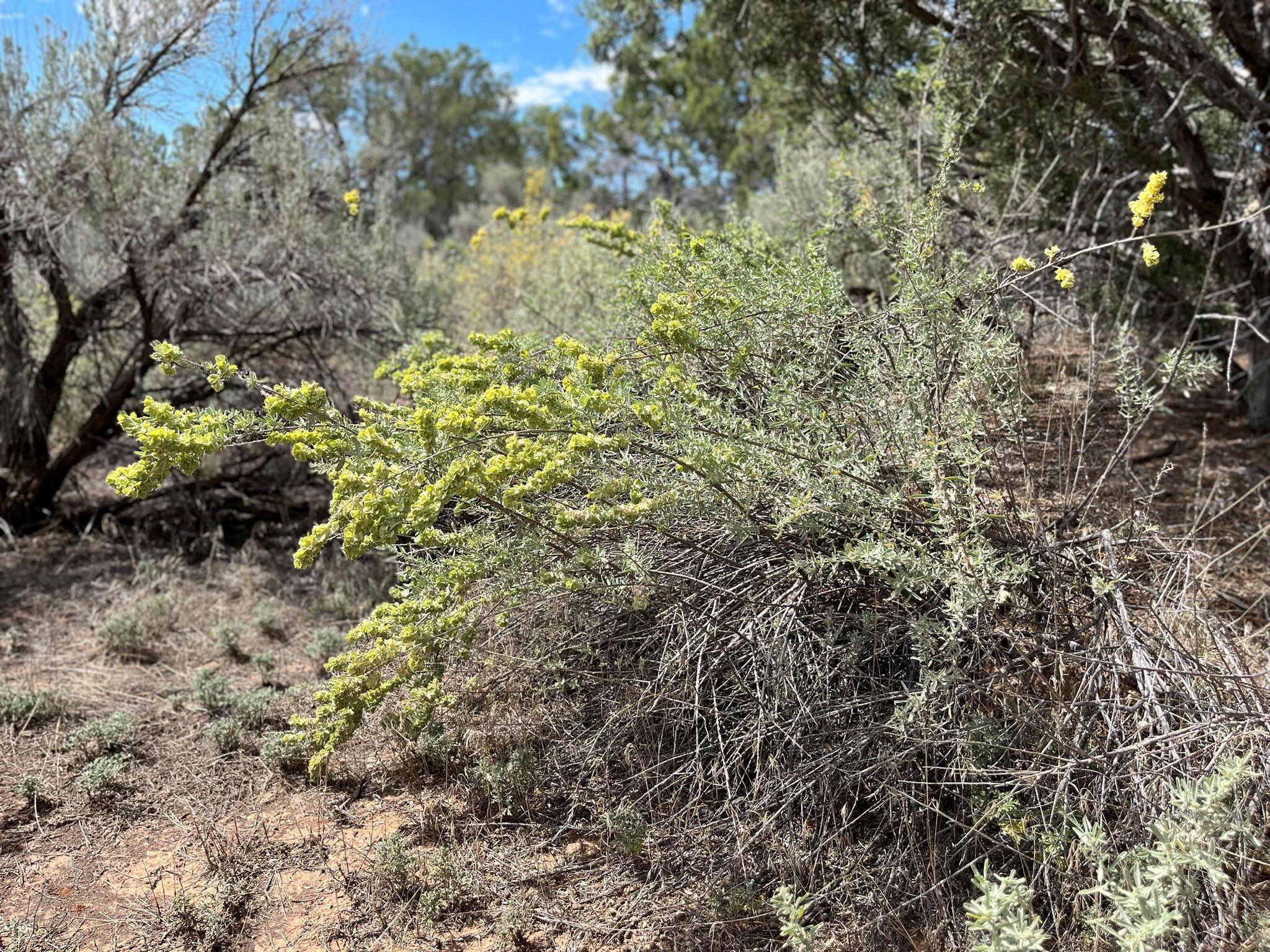
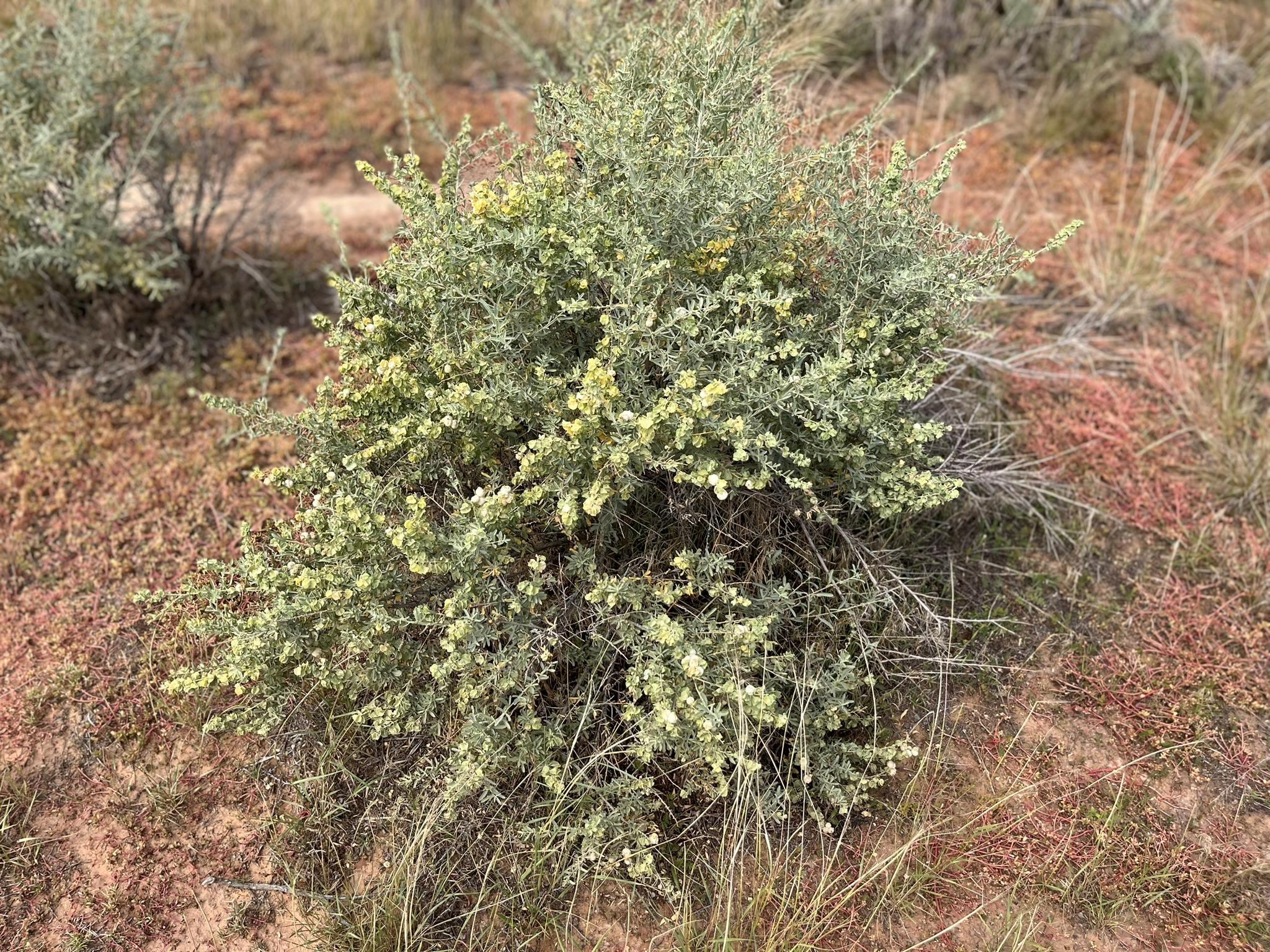
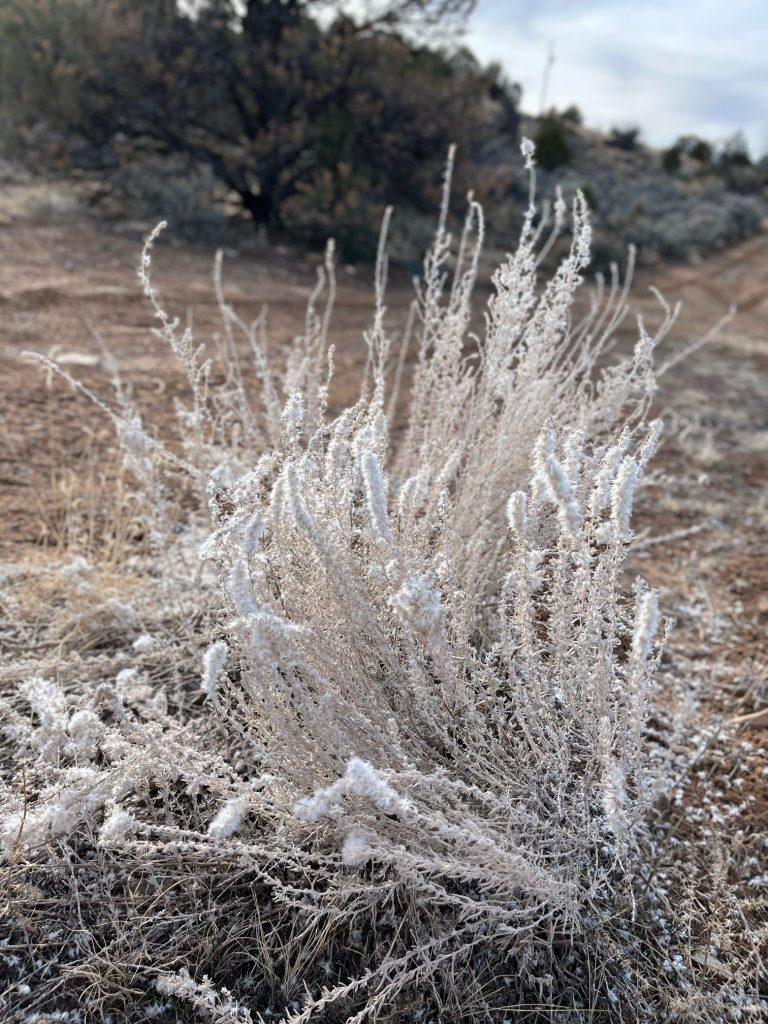
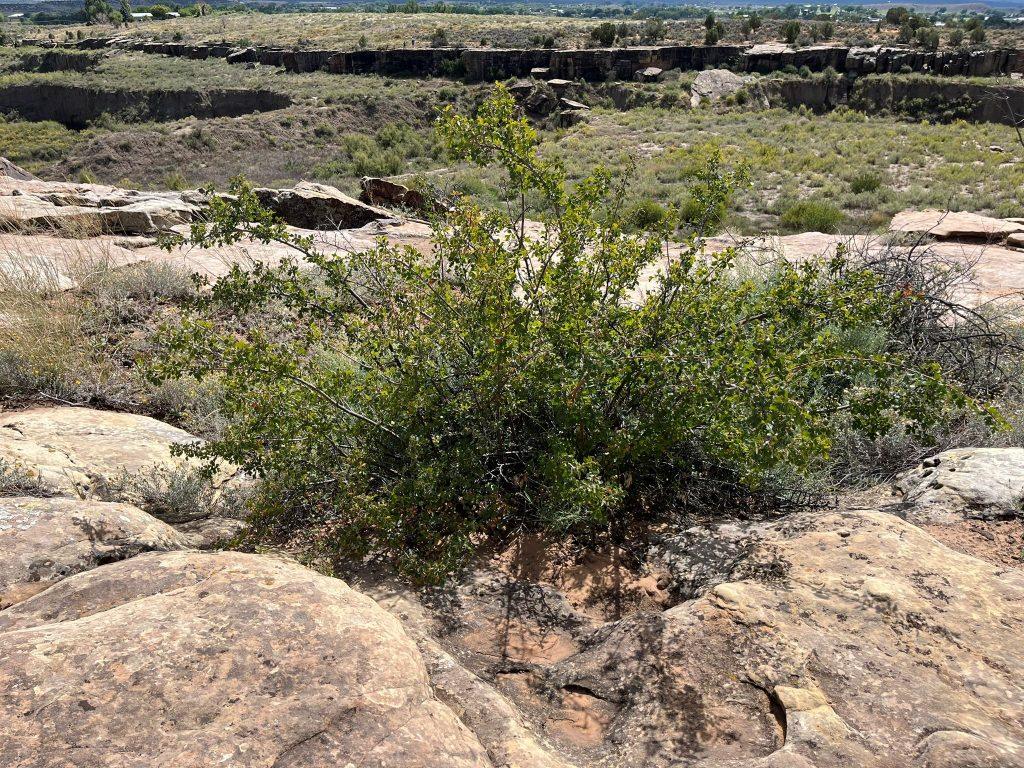
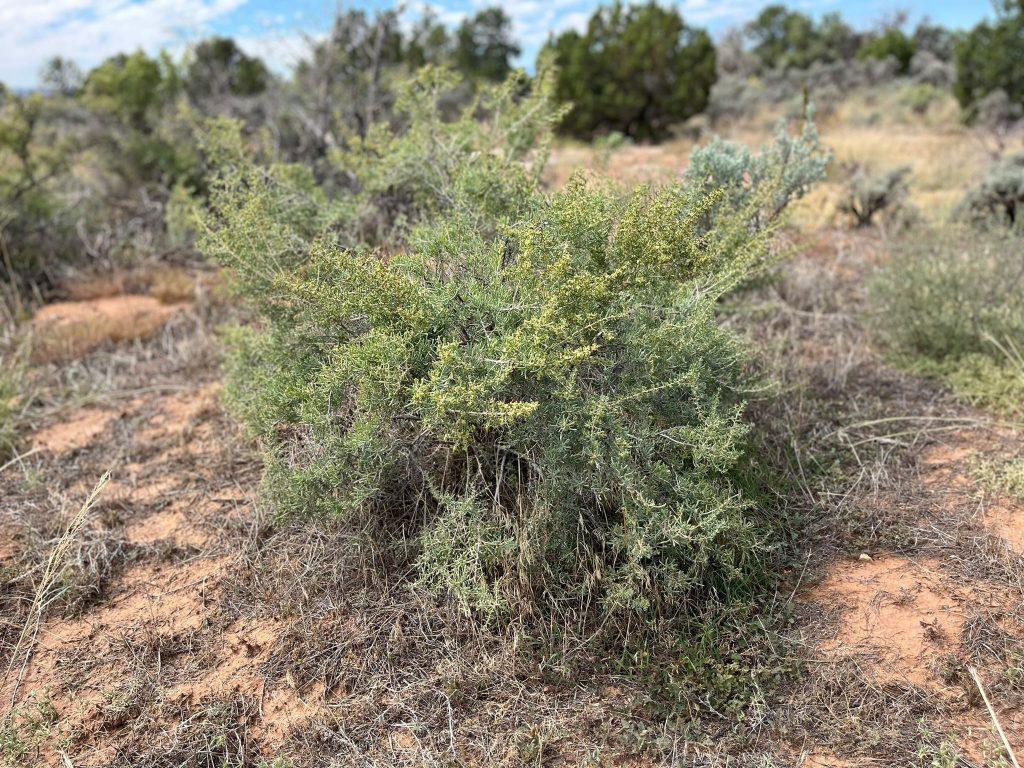
Fourwing Saltbush is a 2- to 6-foot tall shrub native to the west that can occasionally attain a height of 10 feet. It can grow up to about 8,000 feet but is most common on sites with elevations ranging from 4,500 to 6,000 feet and with annual precipitation between 6 and 14 inches. Its gray leaves remain on the plant year-round. Fourwing Saltbush is adaptable to a wide range of soil textures and depths, and can tolerate saline-alkaline conditions. Its name refers to its fruit, which is 1/2 to 1 inch diameter with four membranous wings. It is known by many other names, including chamise, chamize, chamiso, white greasewood, saltsage, fourwing shadscale, and bushy atriplex. Fourwing Saltbush has extensive roots that can reach 20 to 40 feet deep, making it a good plant for erosion control.
Fourwing Saltbush, especially the seed, is very nutritious. It is eaten by deer, quail, a variety of small mammals, and by domestic sheep and goats. The plant is so preferred by deer and domestic livestock that their browsing can be detrimental to the plant’s reproduction. Fourwing Saltbush has many traditional uses among Native Americans as food, fuel, medicine, and to produce a yellow dye. The Navajo made flour out of the salty, mild-tasting seeds.
An interesting fact is that over 90% of Fourwing Saltbush plants are either male or female. The male pollen producers usually occupy the harsher micro-sites, and the females predominate on the richer sites where they can become larger and produce more fruits. The most interesting characteristic is the sex of a plant is not genetically predetermined; it can change based on environmental conditions.