Arrowleaf Balsamroot
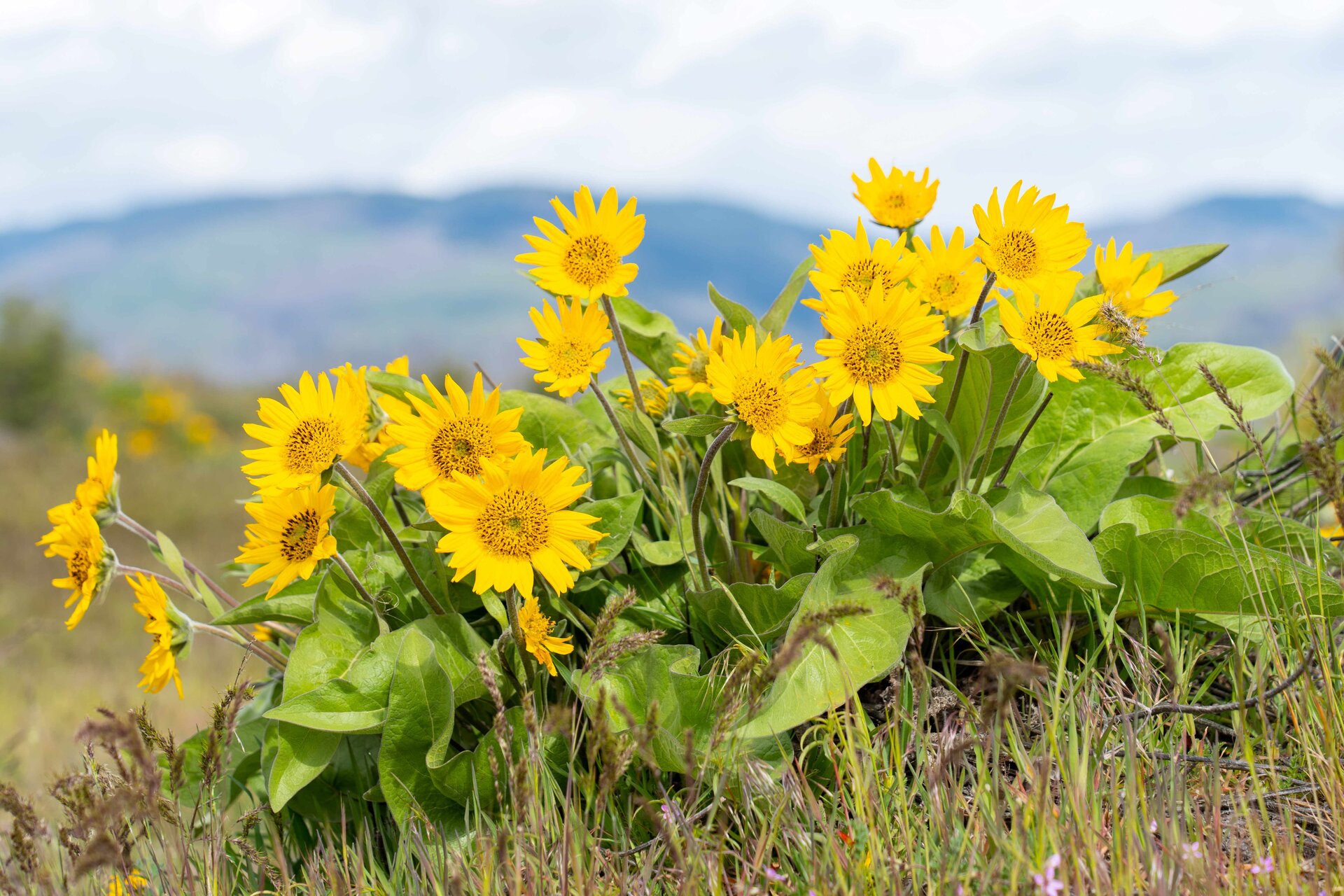
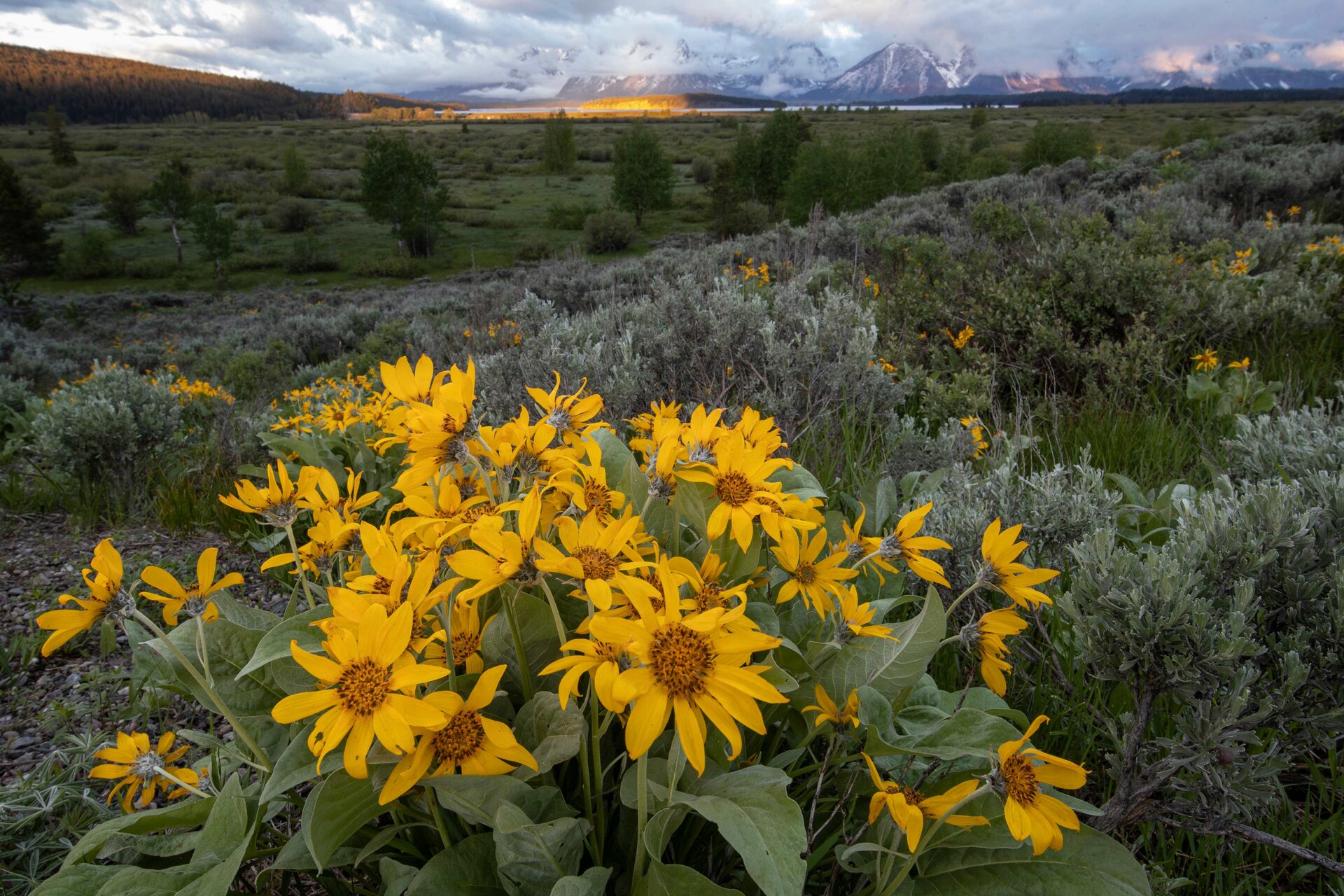
Named for its arrowhead-shaped basal leaves, Arrowleaf Balsamroot is a native, perennial wildflower that can thrive at altitudes up to 9,000 feet. The big yellow flowers and silvery green leaves are very distinctive. It is an important plant for many wildlife species, ranging from pollinators to big game. Native pollinators are attracted to the flowers, and birds and rodents eat the seeds. Young plants in particular, which contain almost 30% protein, are desirable forage for cattle and sheep.
Arrowleaf Balsamroot prefers fine to medium-textured soils. Although it most often occurs naturally on open, sunny hillsides, it can also grow in partial shade. Arrowleaf Balsamroot can be used in landscaping and reclamation work. The seed should be planted 1/4 to 1/2 inch deep in late fall, because it must experience low temperatures (32-50 degrees F) to germinate. The plants develop slowly and may not produce flowers until three years old. However, once established Arrowleaf Balsamroot is a very hardy plant with deep roots that enable it to survive fire, trampling, grazing, and drought.