Growing strong since 1978

Showy Goldeneye

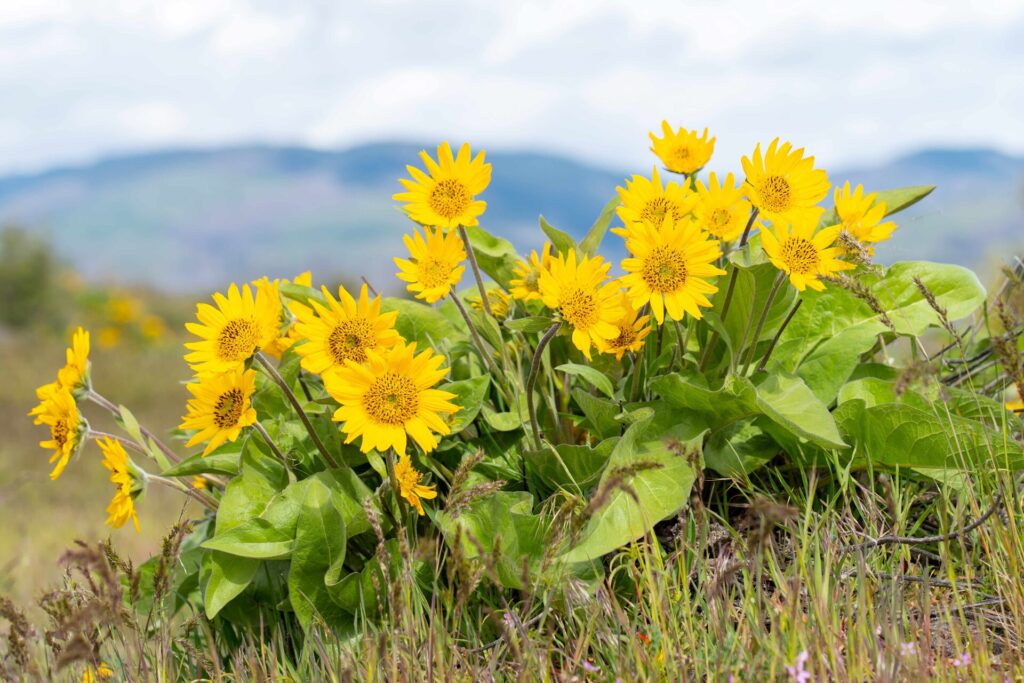
Closely related to sunflowers, Showy Goldeneye is a native wildflower of the mountain west.  It is common on open slopes and is also frequently found along roadsides.  Three different species (multiflora, brevifolia, and nevadensis) have overlapping ranges from sagebrush foothills to subalpine spruce-fir forests (3,000-11,800 feet).   Multiflora, the most widely distributed and the species available from Southwest Seed,  generally occurs at all but the very lowest elevations.

Showy Goldeneye is foraged by wildlife ranging from pollinators to big game.  The pollinators that it attracts include butterflies, hummingbirds, and native bees.  Birds and small rodents eat the seed, and deer and elk eat both the leaves and flower heads.  The plant parts are also palatable to sheep, although nitrate poisoning of livestock is possible if the plants are growing in areas with either high concentrations of animal excrement or nitrogen fertilizers.

Showy Goldeneye can be a useful component of reclamation mixes designed to restore native plant communities.  It develops a woody tap root that helps hold the soil and helps the plants cope with periods of drought.   Competing well against other species, it is capable of spreading by seed into bare areas and areas occupied by annuals.

Showy Goldeneye also does well as an addition to a landscape or garden, as it is easy to grow and will produce flowers its first year.  Borne on slender stems and blooming from mid Summer to Fall, the yellow flowers are 1 to 1.5 inches wide.  As its name suggests, Showy Goldeneye flowers have dark yellow centers.  The plants form bushy clumps standing 1 to 4 feet tall, depending on moisture and available nutrients.  Because the seed needs to be chilled to break dormancy, Showy Goldeneye should be sown in the Fall.   Plant the seed 1/8 to 1/4 inch deep in a firm bed in a sunny location, preferably with well-drained, medium-textured soil.


Details

Blossom Color: Yellow
Bloom Period: Summer
Drought Tolerant: Yes
Life Cycle: Perennial
Native: Native
Project Type: Solar Array, Wildlife Food Plot, Pollinator Support, Native Reclamation, Ornamental
Sun: Partial Sun, Full Sun
Latin Name: Heliomeris multiflora
Seed Per Pound: 1000000
Height: Medium
Min Precip.: 12" – 16"
Zones: 4, 5, 6, 7, 8, 9, 10
Planting Rate: 2–4 lbs/acre

Related Products